We invest in innovative companies that we think can change the world
We bring intelligence, experience, connections and smart financial investment to the table.
We invest in cutting-edge companies across Europe that are changing the world.
We are driven by the belief that innovation offers compelling answers to the most pressing problems facing the world – achieving sustainable prosperity.
Connect with ETF Partners.
We'd love to hear from you. Drop us an email, give us a call or follow us on LinkedIn, Medium or Twitter.
We are driven by the belief that innovation offers compelling answers to the most pressing problems facing the world – achieving sustainable prosperity.
Comments Off on TravelTime launched the TravelTime Data API!
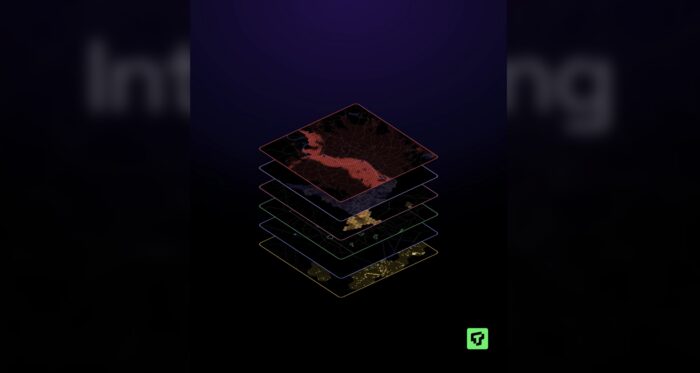
Knowing how long it takes to reach a location is valuable. Knowing what surrounds it is what turns that into a decision. That’s the thinking behind the new TravelTime Data API from TravelTime.
It layers travel-time catchments with millions of points of interest, public transport and road networks, census demographics and neighbourhood data such as air quality, flood risk and broadband.
For anyone weighing where to open a site, build a development or place an investment, it offers a far richer picture of how places actually work. Available across 33 countries and growing, it also marks a natural expansion of TravelTime’s platform into wider location intelligence.
We backed TravelTime because we saw the potential for it to become the reference layer for location decisions. This launch brings that ambition considerably closer.
Congratulations to entire team on the launch. We look forward to seeing how customers put it to work!
Comments Off on Open Cosmos Conversations – See. Connect. Act.
In the latest episode of Open Cosmos Conversations, our portfolio company, Open Cosmos, brought together an expert panel, live from the Harwell Science and Innovation Campus Campus, to discuss how Earth Observation, IoT, and SATCOM can combine to deliver real-time situational awareness.
The conversation covered how integrated satellite technologies, inter-satellite links and edge processing are breaking down traditional silos.
The result is information advantage delivered when and where it matters most.
As the world changes faster, bringing these capabilities together is becoming essential for smarter, quicker decisions.
Comments Off on Hellas Direct ranked 49th among 300 companies in Europe’s Long-Term Growth Champions 2027
Our portfolio company Hellas Direct has ranked 49th among 300 companies in Europe’s Long-Term Growth Champions 2027, published by the Financial Times in partnership with Statista.
The ranking measures growth sustained over a decade. Over that period, Hellas Direct has compounded revenue at nearly 48% a year, growing almost 50x and earning its sixth FT growth recognition along the way.
Today the company serves more than 1.5 million customers across Greece, Cyprus and Romania. Performance of this kind, held over ten years, speaks to the durability of the model and the consistency of the team behind it.
Congratulations to the Hellas Direct team on a well-earned milestone.
Comments Off on Why quantum scales on compute-per-watt, not qubit count
The unfettered growth of AI is constrained by the need for tremendous amounts of power, creating a growing environmental challenge as it is more widely deployed.
In comparison, in a recent opinion piece for TechRadar Pro, Matthijs (Matt) Rijlaarsdam, CEO and co-founder of our portfolio company QuantWare, argues that the growth of quantum computing can have a real positive environmental impact, as its energy requirements are inherently more constrained.
His case is that quantum should be judged on compute-per-watt and cost, rather than the energy required to support largescale qubit systems alone.
The quantum challenge today is to scale existing superconducting quantum systems, which have been stuck at around 100 qubits for almost a decade.
With today’s early systems, more power goes into running the machine than into computation. That should change as companies like QuantWare help to develop larger scale quantum computers.
On the cost side, Matt says at current prices, a million-qubit machine would cost between $100bn and $1tn, but Matt argues that the cost per qubit should fall by at least a hundredfold, as these larger scale quantum computers are developed.
He points to the cost curves surrounding the development of other technologies such as solar panels, batteries, and transistors as great analogies, and they benefited in innovation breakthroughs and high volume manufacturing. Costs can fall even more rapidly as specialist companies, tackling specific pain-points or bottlenecks, focus on building discrete components of the overall system.
The choices made in the next few years will determine whether quantum becomes an industry of expensive demonstrations or of useful computers.
We are backing QuantWare to help build the latter.
Comments Off on Why We Led Open Cosmos’s €300 Million Series C
By Patrick Sheehan, Managing Partner, ETF Partners
When I was a kid, I wanted to be an astronaut. A little later on, in the early 1980s, I funded my PhD in electronics by working as a technical consultant to Marconi Space Systems on advanced antenna design. Space then was for national agencies and the few large contractors who worked for them. I moved on to work with startups instead.
Four decades later, space has become entrepreneurial. Three years ago, ETF Partners invested in Open Cosmos because we could see the tremendous potential that existed for the highly entrepreneurial team behind this business. Last month we led a further large investment into the company, of €300m. Open Cosmos now has the capacity to build a satellite a day, and I could not be more pleased to deepen our partnership with the team there.
Our case rests on two simple convictions. Firstly, the climate crisis we face today cannot be managed without data that only satellites can supply. Secondly, Europe needs sovereign capability in orbit, more than ever. Open Cosmos sits where those needs meet, and it has already built a profitable and rapidly growing business there.
Why we invested originally
We first invested in July 2023, committing £10 million to co-lead the company’s $50 million Series B. Open Cosmos had only raised $7 million in capital since its founding in 2015 and yet had grown organically to positive EBITDA while doubling revenue year on year. Capital efficiency of that order is rare in hardware and exceptional in space. It told us a great deal about the team, their resilience and their effectiveness, and so we were keen to support their ambitious plans for the future.
Our Series B investment gave Open Cosmos the balance sheet it needed to continue to expand very rapidly. Headcount has grown from around 70 to nearly 400 people. The company now manufactures from four sites across Europe and can produce a satellite a day. It has signed more than $370 million in customer contracts over these past three years, and each of the years has shown profitable growth.
Governments have taken note. For example, ESA selected Open Cosmos to build a €60 million, seven-satellite Earth observation constellation for Greece, and Spain’s space agency chose it to lead development of the Atlantic Constellation.
Where the advantage lies
Open Cosmos’s advantage rests on what it has already built. It holds filing rights to key Ka-band frequency spectrum, the scarce resource on which every satellite communications network depends, and it has already put its first ConnectedCosmos satellites into orbit.
Its commercial model is equally distinctive. Through OpenConstellation, governments and organisations share satellite infrastructure and the data it gathers, gaining sovereign capability without building a full system alone. Manufacturing wins the first contract, and the services built on top sustain the relationship.
Expanding into sovereign telecoms
The Series C also enables Open Cosmos to move decisively into telecommunications. Sovereign economies increasingly want secure communications from space that they control, and Open Cosmos intends to provide them through ConnectedCosmos, its broadband and IoT constellation.
Telecoms will also turbocharge the company’s Earth observation business. A network that can both observe and communicate will be able to deliver what it sees directly to the people who need it. For governments that already rely on Open Cosmos for observation, sovereign connectivity is a natural extension of the same relationship.
Protecting the orbit
We established ETF Partners in 2005 on the conviction that technological innovation is the only practical way to address climate change. Space is now central to that conviction, and our commitment extends beyond Open Cosmos. As constellations multiply, so does the risk to everything already in orbit. Satellites can only deliver climate data and secure communications if the orbits they occupy remain usable.
That is why, in 2025, we also led the fundraising for Look Up. Co-founded by the first commander of French Space Command, Look Up is building a radar network to track objects in orbit and reduce the growing risk of collision. A sustainable Earth depends on a sustainable orbit, and Europe should hold the instruments to secure both.
What lies ahead
The conditions for building world-leading space companies have now converged in Europe. Rafel Jorda Siquier and his team have shown the calibre of ambition needed to convert that potential into commercial results.
We believe Open Cosmos can become one of Europe’s defining infrastructure companies.
Comments Off on Vulog Plans 2027 Autonomous Mobility Pilot, Building on Leo&Go’s Profitable Model
Our portfolio company Vulog has announced plans for an autonomous vehicle pilot in France, to launch in the second half of 2027.
The pilot builds on five years of running Leo&Go, Vulog’s shared mobility service in Lyon. Since launching in September 2021, Leo&Go has grown to 75,000 registered members and a fleet of 400 vehicles. It reached the monthly EBIT break-even point within 21 months.
Vulog’s view is that autonomous driving technology alone will not create a viable mobility service. Commercial deployment will also depend on fleet utilisation, maintenance, pricing, customer operations and cooperation with public authorities. These are problems carsharing operators already solve every day.
As Gregory Ducongé, CEO of Vulog, shared:
“An autonomous vehicle does not create a mobility service on its own. The decisive challenge will be turning autonomous vehicles into reliable, highly utilised and economically sustainable fleets. This requires not only technology but also deep operational capabilities. Leo&Go has allowed us to develop and validate those capabilities every day for the past five years.”
Vulog is now defining the scope of the pilot and assessing potential technology and operational partners. The longer-term ambition is fleets that combine human-driven and autonomous vehicles within a single service.
Comments Off on Episode 41: Making New Energy Work for Everyone with Chris Norbury
In this episode of Sustainability Talks, Rob Genieser, Managing Partner at ETF Partners, sits down with Chris Norbury, CEO of E.ON UK, a major part of one of the largest, most progressive utilities in Europe. Chris has been a consistent leader in driving the energy transition in the UK, while running one of the UK’s most important energy companies.
E.ON is investing heavily in digital platforms and new business models. This includes its strategic partnership with Amber Electric, an ETF Partners portfolio company, and Allume Energy to help households and businesses use energy in fairer, greener, and smarter ways.
In this conversation, Rob and Chris examine why the energy transition is at a critical inflection point, where climate sustainability must be paired directly with consumer affordability. Chris outlines E.ON’s customer-outward philosophy for designing the grid of the future, demonstrating how deploying domestic flexibility, such as home batteries and vehicle-to-grid integration, can alleviate billions in distribution network upgrade costs while directly reducing customer bills.
They also explore what it takes for major energy suppliers to be true strategic partners to tech scale-ups, the transformative role of AI and data centre integration in grid orchestration, and the critical policy shifts needed to ensure the energy transition delivers value for everyone.
Whether you are interested in energy technology, utility innovation, or how consumer-facing software and hardware can accelerate global decarbonisation, Chris’s insights are essential listening.
Listen to the episode below or on your preferred podcast platform HERE.
Chapters: 00:00 Introduction to Sustainability Talks and E.ON UK 02:19 The UK Energy Transition: Navigating the Affordability and Sustainability Inflection Point 04:46 Designing the Grid Consumer-Outward: Batteries, Flexibility, and Reducing Network Costs 07:36 How Utilities Choose Technology Partners and Align Purpose with Commercialisation 12:06 Strategic Partnerships, Fast-Following, and Incubating Scale-Up Ecosystems 16:13 The Utility of Tomorrow: Orchestrating a Decentralised Grid 18:16 AI and Data Centres: Turning Surging Demand into Circular Grid Assets 22:09 Deploying Agentic AI for Internal Efficiency and Next-Generation Customer Propositions 26:24 Reasons for Optimism: Customer Demand, Market Motivation, and Emerging Tipping Points 30:30 Key Milestones Ahead: Vehicle-to-Grid, Time-of-Use Tariffs, and Heat Pump Adoption 34:33 Policy, Regulation, and Avoiding a Ghettoised Energy Market 38:44 Final Thoughts: Making New Energy Work for Everybody
About the Guest:
Chris Norbury is the Chief Executive Officer of E.ON UK, leading the company’s efforts to drive the energy transition through digital innovation, customer-centric energy solutions, and strategic partnerships across the sustainable technology landscape. With extensive leadership experience within the energy sector, Chris is focused on transforming traditional utility models into decentralised, intelligent, and affordable energy ecosystems.
Follow Chris Norbury on LinkedIn and find out more about E.ON UK.
Comments Off on Can quantum turn ‘magic’ into money?
Quantum computing’s biggest question has shifted. It used to be “if”. Now, the question is “how can we benefit from it?”
The Financial Times’ Richard Waters and Michael Peel explore exactly that in the latest instalment of their Moonshot Capitalism series, and we’re pleased to see our portfolio company Riverlane featured.
Riverlane CEO Steve Brierley argues that using quantum machines to simulate nature “shouldn’t be mistaken for a narrow business opportunity.” The payoff could reach from new medicines to better batteries, and progress on discovering energy and climate related solutions for the biggest challenges of our day!
That last part is why we backed Riverlane. Many of the hardest problems in the energy transition are, at heart, chemistry and materials problems, and they’re the kind that classical computers struggle with.
Getting there depends on reliability. Riverlane’s error correction technology is what helps quantum hardware move beyond lab demonstrations and into useful, commercial applications.
Investor appetite is clearly growing. According to PitchBook data cited by the Financial Times, more than $4bn of venture capital has gone into quantum companies so far this year, almost matching the total for 2025.
Congratulations to Steve and the entire Riverlane team. Read the full piece HERE.
Comments Off on Delivering before dawn: how Modern Milkman runs its London fleet solely on Vok Bikes
Six nights a week, their riders bring milk, fresh produce and essentials to doorsteps across central London before the city wakes up. The entire central London operation runs on electric cargo bikes from Vok Bikes.
A recent case study from Vok shows what that looks like in practice:
🟢 Riders target 20 drops an hour on routes averaging around 70 km a night, carrying around 100 kg of cargo
🟢 The fleet is fossil-free and almost silent, which matters on residential streets at 2am
🟢 Fragile cargo is handled with care, with zero cracked eggs reported
The London fleet is set to double from 11 bikes to 22, with other English cities next
Vok has also built custom features tailored to Modern Milkman’s operations, including two-sided cargo doors and an extra battery compartment for the longest routes.
Cleaner, quieter city logistics, delivered before dawn.